Admin_Adham
 Jump to Key Points
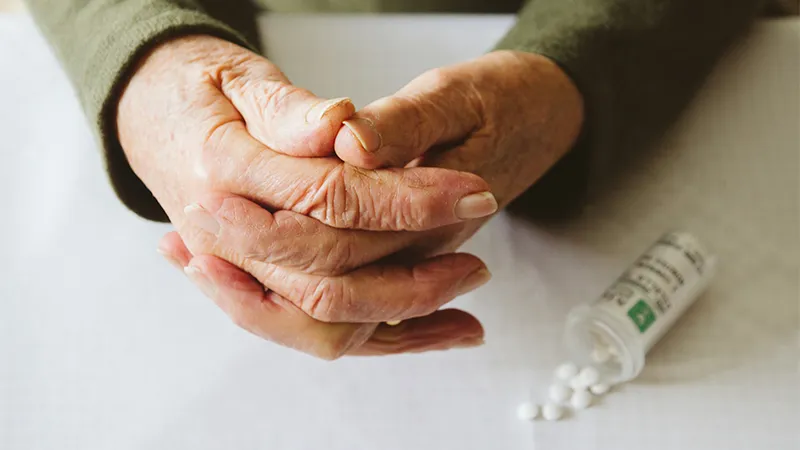
Supplements are a part of everyday life for many midlife women, but most never mention them to their clinicians.
“Over half of women — 64% — take supplements, and we know that a third of them are taking four or more supplements,” said Annina Burns, PhD, RDN, clinical dietitian and founder of SimplinaHealth, who presented a session at The Menopause Society 2026 Annual Meeting.
The supplement industry is vast and underregulated, with more than 180,000 products available in the US, Burns said. Social media amplifies the idea that supplements are an effective and safe option to manage many conditions, with one study suggesting that two thirds of the top 1000 Instagram menopause posts promoted supplements, but only 18% of those posts came from credentialed physicians.
Women turn to supplements for several reasons, Burns said, including severe vasomotor symptoms and sleep loss, lingering fear of menopausal hormone therapy since the Women’s Health Initiative, and concerns about hair, skin, and aging.
The problem, she said, is that clinicians often don’t know their patients are taking supplements. “Research shows women do not tell physicians that they take dietary supplements about 70% of the time,” Burns said. “There’s uncertainty; there’s a fear of rejection.”
She urged clinicians to add a dedicated supplement section to intake forms and never assume zero intake.
“I do think it’s a good practice to ask patients about vitamins and supplements the same way we ask about prescribed medications and over-the-counter medications,” said Holly Cummings, MD, Ob/Gyn with Penn Medicine in Philadelphia. “I think sometimes healthcare providers ask what medications somebody is on, when they [should] ask what vitamins, supplements, and medications they are on.”
Burns said patients should be asked for the exact product, brand, dose, frequency, and duration and should be invited to bring in their bottles or photos of them. Burns also recommended asking why they take each product and whether they have noticed a difference. She suggested framing the conversation around fit, offering a sample script: “We want to see where these products fit into your overall health strategy and make sure they are targeting your symptoms.”
Burns stressed that “we do have randomized controlled trials for some supplements for a range of midlife symptoms,” while the evidence for others is weak or conflicting. Her presentation rated vitamin D with calcium and vitamin B12 as supported when patients are deficient and creatine and protein as helpful for muscle when combined with resistance training. Psyllium fiber had strong evidence for lowering low-density lipoprotein cholesterol. By contrast, black cohosh and soy isoflavones were not recommended in The Menopause Society’s 2023 nonhormone therapy position statement, which cited no significant benefit and mixed findings, respectively.
Safety was another focus of Burns’ presentation. St. John’s wort, which induces CYP3A4, can speed the clearance of statins, anticoagulants, and oral contraceptives. Burns also noted that ginkgo and ginger may add to bleeding risk with anticoagulants and that rare liver injury has been reported with green tea extract.
Cummings said she approaches patients in an understanding way, even if they are taking supplements that might interfere with other medications.
“If I identify a supplement that I think not only might not be beneficial for a patient but might also cause harm, I do explore that with the patient in a supportive way,” Cummings said.
Burns suggested starting with a diet. “One of my conclusions is that you want to focus on food first,” she said. “We want [women] getting calcium, magnesium from food. But in many cases, supplements are needed just for the sheer amount that they need at that stage in life. It can be kind of hard to get 1500 milligrams of calcium and 350 milligrams of magnesium [from food], and you don’t want to miss it for bone health. It’s crucial.”
“For women in midlife, nutrient needs increase, but calorie needs go down,” she said.
Burns closed by encouraging clinicians to refer patients to a registered dietitian, nutritionist, or certified nutrition specialist and to use the best available evidence. “Supplements can have value when combined with a good diet for the right person for the right condition,” she said.
Burns reported being the founder of the women’s health coaching platform SimplinaHealth. Burns reported having no other relevant disclosures. Cummings reported being a trainer on Nexplanon insertion for Organon.
Sony Salzman is an Emmy Award-winning journalist covering science and medicine with bylines in The Atlantic, STAT News, NBC, MedPage Today, and The Boston Globe. Previously, she worked as the coordinating producer of ABC’s Medical Unit.