Admin_Adham
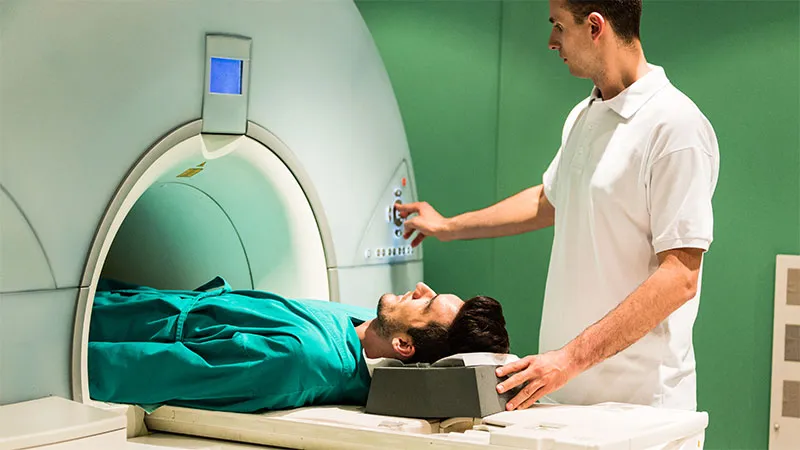
A six-session single course of low-dose radiation therapy reduced pain and improved physical function in adults with mild-to-moderate knee osteoarthritis, according to a randomized controlled trial (RCT) presented at the American Society for Radiation Oncology (ASTRO) 2025 Annual Meeting in San Francisco.
Patients who received a 3-Gy dose had a statistically significant improvement in the Outcome Measures in Rheumatology-Osteoarthritis Research Society International (OMERACT-OARSI) response criteria compared to those receiving a sham treatment or a 0.3-Gy dose, reported Byoung Hyuck Kim, MD, PhD, an assistant professor of radiation oncology at Seoul National University College of Medicine and Boramae Medical Center, Seoul, South Korea.
“Knee osteoarthritis is the leading cause of disability, with a persistent treatment gap between conservative care and invasive joint replacement surgery,” Kim said, and conventional pain medication such as nonsteroidal anti-inflammatory drugs often have significant side effects with long-term use. Although low-dose radiotherapy could offer a noninvasive anti-inflammatory alternative treatment, its use has been limited by lack of clinical experience and adequately robust RCT evidence, he added.
‘Findings Align With the Data in the Other RCTs’
“I’m excited to see some of the data about the study from Korea, which has been eagerly awaited since it was known on ClinicalTrials.gov,” Austin Kirschner, MD, PhD, associate professor of radiation oncology at Vanderbilt University in Nashville, Tennessee, told Medscape Medical News. “The findings align with the data in the other RCTs,” he said. “This supports [low-dose radiation therapy] as a viable noninvasive treatment option, particularly for patients who have exhausted other nonsurgical therapies.”
Kirschner, who was not involved in the study, said the results support current clinical practice to use a 3-Gy dose. Although low-dose radiation has been used for decades in Europe to treat osteoarthritis, it has only recently begun to make a comeback in the United States. Yet there have only been two RCTs — one from Russia and one from Iran— that used modern protocols to quantify its effectiveness, Kirschner said. Two older sham-controlled studies performed in Netherlands did not use modern techniques, had poor patient selection, and were not adequately powered, he added.
Trial Results
The trial enrolled 114 adults, aged 50-85 years, from three Korean academic centers. All participants had mild-to-moderate knee osteoarthritis, with a Kellgren-Lawrence grade of 2-3 and a baseline visual analog pain (VAS) pain score of 50-90 out of 100 while walking. The participants were randomly assigned to three equal groups: The intervention group received six treatments of 0.5 Gy each (a total of 3 Gy); another intervention group received a total of 0.3 Gy over six treatments; and the control group received six sham treatments, during which patients went through the same setup for therapy but received no radiation from the machine.
Over the next 4 months, participants did not use any pain relievers other than acetaminophen to avoid potentially masking the therapeutic effects of the treatment.
The primary endpoint was meaningful improvement at 4 months in at least two of three areas — pain, physical function, and overall condition — using the OMERACT-OARSI response criteria. Participants also completed questionnaires about pain, stiffness, and function using the Western Ontario and McMaster Universities Arthritis Index (WOMAC).
After 4 months of follow-up, 70.3% of patients who received the 3-Gy dose met the OMERACT-OARSI response criteria, compared to 41.7% in the sham group (P = .014) and 58.3% in the 0.3-Gy group, which was not significantly different than the sham group (P = .157). More participants in the 3-Gy group (56.8%) than in the sham group (30.6%) reported clinically meaningful improvement in pain, stiffness, and physical function with a score of at least 16 on the WOMAC (P = .024).
There were no significant differences between the groups in the secondary endpoints of amount of pain medication participants used, VAS score, Patient Global Assessment (PGA) score, or serum inflammatory markers. No participants reported side effects from the radiation. Kim noted that each dose involves less than 5% of the amount of radiation delivered in cancer treatments. The researchers will evaluate pain relief in the participants again at 8 and 12 months, when they will also assess joint structure on imaging.
Restricted Use of Analgesics Reduced Confounding
“It is remarkable that they restricted the use of concomitant analgesics and saw a significant response rate in the 3-Gy group, which really shows the power of low-dose radiation therapy to reduce inflammation and symptoms,” Kirschner said. “Whether lower doses can be effective remains unknown. Although radiobiology data supports very low radiation doses having an anti-inflammatory effect…there may be a lower threshold of clinical biological effect in patients, for example, depending on the starting level of inflammation or joint degeneration.”
Kristina Mirabeau-Beale, MD, MPH, a radiation oncologist at GenesisCare in Florida, said during a press briefing that the study was exceptionally well done, particularly because it included “patients in that sweet spot of mild-to-moderate arthritis who often really flood our clinics in our communities.”
Though it was small, the trial was “was really well executed in terms of being placebo-controlled” and showed a substantial pain improvement, “so here we can say definitively that the benefit is from radiation more so than just the placebo effect of interacting with our healthcare system,” Mirabeau-Beale said.
She was also impressed with the strict analgesia control because pain relief use can confound real-world results in the clinic, and the safety profile looked good. The trial “expands the conversation so that we can advocate for low-dose radiation to be used in our different patients when we’re discussing this with other specialists who may be more resistant to adopting low-dose radiation for osteoarthritis,” she said.
With the currently available data, it’s difficult to speculate on why significant differences did not occur in secondary outcomes, Kirschner said.
“Mean changes in VAS, PGA, and serum markers may require larger separations to show statistically significant differences between pretreatment and posttreatment values, which their dataset didn’t have,” he said. ”It is possible some of these secondary outcomes are less sensitive to change or may require larger sample sizes to detect differences.”
While long-term follow-up and imaging will be important to see, Kirschner added that the study “reinforces the importance of using validated endpoints and appropriate dosing” in research about low-dose radiation for osteoarthritis.
Separate Study Looks at Integration Into US Practices
Although Kirschner was not involved in this RCT, he is senior author of an observational study on low-dose radiation for osteoarthritis that one of his coauthors presented at ASTRO 2025. That ongoing prospective study, called MOBILE, is assessing the feasibility of integrating the therapy into US radiotherapy practices. So far, 103 patients have enrolled and received treatment at 148 joint sites, reported Hayden Byrd, MD, also with Vanderbilt University Medical Center. Patients had a median age of 75 years, most were female (72%), and the median BMI was 28.
Among the 76 joint sites with 6-month follow-up data — including 53% hands and 29% knees — the mean VAS score decreased from 7.6 at baseline to 3.4 at 6 months (P <.0001). Of the patient population with follow-up of at least 6 weeks, 84% reported pain improvement, 64% had a VAS score decrease of at least 3, 41% had a VAS score decrease of at least 6, and 57% reported reduced or no use of pain medication. The only adverse events reported were eight instances of grade 1 dermatitis. In addition, seven sites underwent re-irradiation.
The research was funded by Korea Hydro & Nuclear Power Co. Ltd. Kim, Kirschner, and Mirabeau-Beale had no disclosures.
Tara Haelle is a science/health journalist based in Dallas.