Admin_Adham
 Jump to Key Points
In Europe, an aging population, rising prevalence of chronic diseases, budget constraints, environmental degradation, and supply problems are creating an increasingly complex healthcare landscape. Therefore, addressing medication waste and optimizing drug use are essential.
Available data suggest that large quantities of medication are wasted each year in households and hospitals. Examples from France and a European hospital analyzed by the European Association of Hospital Pharmacists illustrate the scale of the problem. In households, substantial quantities of medications become waste, and the volume continues to increase because of consumption trends, according to a report by the Organisation for Economic Co-operation and Development on household pharmaceutical waste management.
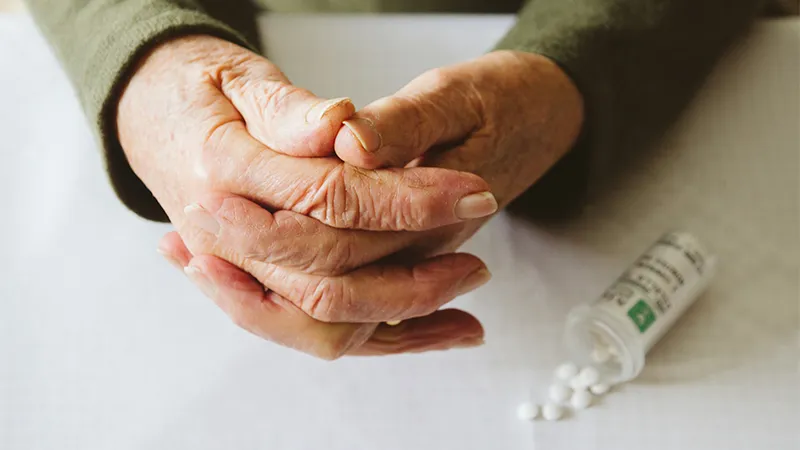
Poor treatment adherence, early patient recovery, treatment changes, and prescription or purchasing errors can leave medications unused or expired in households. Estimates of household medication waste vary widely among countries. In France, for example, households reportedly disposed of 17,600 metric tons of unused or expired medications in 2018, equivalent to 260 g per person.
In hospitals, data from the European Association of Hospital Pharmacists showed that at one EU hospital, 27.9% of medications dispensed to inpatients were returned to the pharmacy, and 83.5% of those returned medications were discarded. Overall, 23.3% of all dispensed medications were wasted. This amounts to 87,500 units annually and is valued at €41,000.
- Household med waste substantial; France 17,600 metric tons in 2018.
- Hospital waste high: 23.3% dispensed meds wasted; €41,000/year.
- Nonadherence + polypharmacy common; ≥65 yrs polypharmacy 36.2%.
- Waste + shortages coexist; same drugs may be discarded despite scarcity.
- Disposal/excretion contaminate water; >600 pharma substances detected in EU supplies.
Medication waste reflects deeper structural problems in healthcare, with clinical consequences underscored in a report by the Federation of European Academies of Medicine (FEAM) on polypharmacy, aging, and medication waste in Europe.
FEAM noted that up to half of all prescriptions for chronic diseases in Europe were not taken as directed. It also reported that polypharmacy affects 36.2% of adults aged 65 years or older. In addition, some prescribed treatments are never used by patients who are terminally ill or receiving end-of-life care. In many hospitals, medication management remains manual or relies on non-automated systems, contributing to errors, overstocking, and medication expiration.
Economic Consequences
Medication waste incurs substantial economic costs. According to the FEAM report, the estimated annual cost is €2.8 billion, funds that the EU could otherwise use to finance major improvements in healthcare. Improper medication disposal also generates costs associated with environmental cleanup and the operation of collection programs at pharmacies.
Beyond the cost of wasted medications, poor treatment adherence creates a substantial financial burden for healthcare systems. It is associated with an estimated 200,000 premature deaths annually and costs the EU an estimated €80-€125 billion per year. The FEAM report concluded that healthcare systems pay twice when medications are not taken as prescribed: first, for treatments that provide no benefit, and second, for the costs of avoidable hospitalizations, emergency department visits, uncontrolled disease progression, and premature death.
Environmental Consequences
The pharmaceutical and healthcare sectors also contribute to environmental pollution, and medication waste contributes to this burden. According to the FEAM report, the healthcare sector accounts for 5.2% of total greenhouse gas emissions in the EU, equivalent to 248 million metric tons of carbon dioxide annually.
Europe-wide data on healthcare emissions from pharmaceutical supply chains are limited. However, in England’s healthcare system, the National Health Service supply chains account for 71% of the emissions. These chains encompass the entire process through which a product moves from its source to the end consumer.
Water pollution is another concern. More than 600 pharmaceutical substances have been detected in EU water supplies, and according to FEAM, more than 40% of rivers worldwide are estimated to contain potentially dangerous levels of medications.
One major route through which pharmaceuticals enter the environment is human excretion, even when medications are correctly used. Although some drugs are readily metabolized in the body or degraded rapidly in the environment, others are not. For human medications, excretion rates range from 0% to 100%, and some substances may remain unchanged or as metabolites.
The second route is improper disposal, typically by flushing leftover medications down toilets or sinks or discarding them in household trash that may end up in landfills. In these cases, pharmaceutical-contaminated leachate can form and contaminate groundwater.
These consequences include damage to aquatic ecosystems, antibiotic resistance, and long-term effects on human health. However, the effects of chronic exposure to low doses of complex pharmaceutical mixtures are not fully understood.
The Paradox of Medication Shortages
The coexistence of medication waste and substantial shortages points to structural deficiencies in medication management. In some cases, medications in short supply or unavailable are the same ones being discarded, resulting in financial losses and potential harm to patients.
The EU is addressing these shortages through a legislative package on medicines that establishes new rules for critical medicine. The goal is to improve shortage monitoring and management. Manufacturers are required to report shortages more quickly, develop prevention plans, and take measures to address critical situations. A list of essential medicines will also be established to strengthen availability, reduce dependence on single suppliers and third countries, and increase pharmaceutical production in the EU. However, the proposal does not explicitly include initiatives to reduce medication waste.
Belgium and Netherlands
Several European countries, including Belgium and Netherlands, have introduced measures to reduce medication waste. However, Netherlands does not have national figures to quantify the effects of these measures.
Belgium has developed an advanced medication waste management system through collaboration among pharmacists, industry, and public authorities. Its free collection system is funded through extended producer responsibility, an environmental policy principle that makes producers responsible for managing the waste generated by their products, including after those products have been sold and used. The country has established an extensive network of collection points at pharmacies and recycling centers.
Belgium has also introduced strategies to reduce waste, including medication regimen reviews at community pharmacies, deprescribing for older patients, and digital and automated systems in hospitals. These measures have improved safety and treatment adherence and reduced inappropriate medication use.
However, further improvements are required. Automated dispensing systems are not fully integrated between hospitals and primary care facilities, and digital interoperability and implementation remain limited across some facilities.
Netherlands does not have precise national figures on medication waste, but its advanced healthcare system has facilitated efforts to reduce it. The country has a high proportion of older residents and many patients with multiple chronic conditions, making optimal medication use particularly important.
One key component is the pharmaceutical reimbursement system, which groups interchangeable drugs and uses reference prices to encourage efficient prescribing and control spending.
Netherlands has also widely implemented automated dispensing systems that prepare medications in personalized doses with full traceability, thereby reducing errors and waste. In addition, the reimbursement system pays only for dispensed doses, further helping to limit waste.
In primary care, large-scale medication review programs involve community pharmacies and collaboration between pharmacists and physicians. These programs improve treatment quality and reduce errors.
The country also has a national digital interoperability infrastructure that allows physicians and pharmacists to access patients’ medical records, improve prescribing practices, and prevent duplicate prescriptions.
Possible Measures and Solutions
In February 2026, the European Health Management Association (EHMA), through the MEDIWASTE project, published a position paper calling for action across the EU to address pharmaceutical waste and medication management. The paper urged European institutions and member states to recognize waste as an urgent policy issue and incorporate it into ongoing pharmaceutical and healthcare system reforms.
EHMA officials emphasized that the Critical Medicines Act and the revision of the pharmaceutical legislative package focus on the security of supply but do not yet explicitly address waste reduction. “This omission represents a missed opportunity to link efficiency, sustainability, and resilience within a single reform agenda,” the EHMA experts said.
Similarly, FEAM proposes incorporating medication waste into legislation, specifically the Critical Medicines Act and the pharmaceutical legislative package, to prioritize it at the EU level.
FEAM also proposes an EU investment program with a budget of €3 billion for 2028-2035 to modernize medication management. The proposed funding would be allocated to hospital automation (40%), automated dose-dispensing systems (35%), improvements to the information technology infrastructure (20%), and training for healthcare personnel (5%). These measures are expected to reduce waste by 30% over 5 years and improve treatment adherence by 20%.
FEAM recommends that each country adapt its legislation to facilitate the implementation of automated dispensing systems, fund technological solutions in hospitals and health centers, and promote continuing education for healthcare professionals.
In Spain, medication collection is primarily managed through the SIGRE system, which allows individuals to return expired or unused medications and their packaging to pharmacies. The system also collaborates with health centers and hospitals to collect the waste generated during healthcare activities, an initiative implemented gradually. Its goals are to ensure appropriate environmental management, prevent medication accumulation in households, and promote responsible medication use through awareness campaigns and good prescribing practices.
Reducing medication waste should not be viewed solely as a cost-containment measure. This represents a strategic opportunity to strengthen healthcare system resilience, improve patient-centered care, reduce environmental harm, and promote more sustainable medication use.
Addressing waste is inseparable from improving the quality of care. Implementing these solutions could improve the effectiveness, sustainability, equity, and resilience of European healthcare systems. Achieving these goals requires action from policymakers, healthcare professionals, industry, and society.
This story was translated from El Médico Interactivo on Univadis, part of the Medscape Professional Network.