
 Admin_Adham
 Jump to Key Points
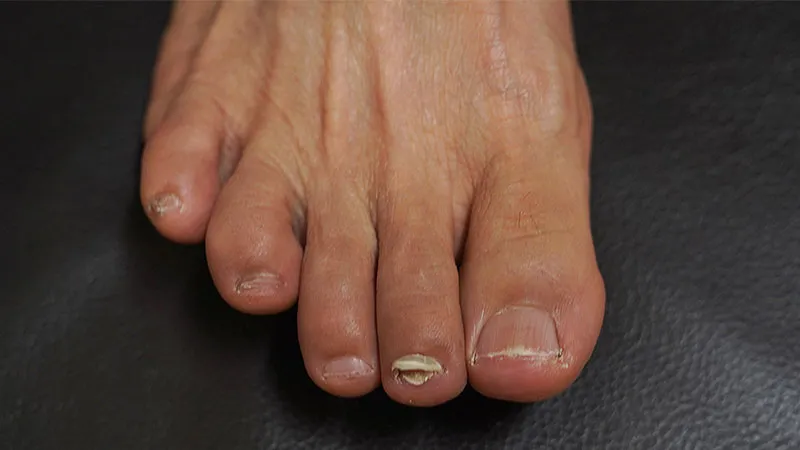
NEW YORK — Despite the limited number of studies that have evaluated the differences in the appearance and treatment of nail disorders by skin phototype, there is enough evidence to conclude that differences are meaningful, according to an expert who focused specifically on nail psoriasis, nail lichen planus, and onychomycosis.

Although not necessarily more difficult to treat, “both nail psoriasis and nail lichen planus tend to be more severe at the time of presentation in skin of color,” according to Shari R. Lipner, MD, PhD, director of the nail division and professor of clinical dermatology at NewYork-Presbyterian Hospital/Weill Cornell Medical Center in New York City.
While onychomycosis is the most common nail disease encountered in clinical practice, Lipner cited a 2021 systematic review of 182 studies involving this disorder in which race or ethnicity data was reported in only 17.5%.
Based on the data available, treatments for all three of the skin disorders she reviewed appear to be similarly efficacious when Fitzpatrick skin types IV to VI are compared to lighter phototypes. But Lipner, speaking at the Skin of Color Update (SOCU) 2026, suggested that delays in diagnosis are more common among those with darker skin types.
- Nail psoriasis + lichen planus often more severe at presentation in skin of color.
- Nail psoriasis: diagnosis delay 59 vs 24 months; higher NAPSI in Fitzpatrick IV-VI.
- Nail lichen planus: darker phototypes had higher NALSI + more irreversible changes.
- Onychomycosis testing/treatment less frequent in Black patients despite similar efficacy.
- Treatment algorithms appear phototype-independent; limited nails vs >3 nails guide therapy.
Nail Psoriasis Data By Phototype
For example, in the case of nail psoriasis, a 2023 retrospective analysis of 87 patients with nail psoriasis led by Lipner found that the median time to diagnosis among those with Fitzpatrick skin types IV to VI was 59 months relative to 24 months (P = .009) for those with skin types I-II. On the basis of the Nail Psoriasis Severity Index (NAPSI) score, severity at diagnosis among the former group was also greater (6 vs. 5; P = .029), a finding likely related to the diagnostic delay.
While hyperpigmentation and longitudinal melanonychia are more common in nails of patients with darker phototypes who have nail psoriasis, the classic signs of nail involvement are usually also present. In addition, while isolated nail psoriasis occurs in less than 10% of psoriasis cases overall, Lipner said there are data to suggest this occurs somewhat more often in patients with darker skin phototypes.
In a single-center retrospective study of nail psoriasis from Lipner’s own institution that was submitted recently for publication, patients with Fitzpatrick skin types V-VI represented 22% of the cohort, but the disease burden was higher, according to Lipner.
When patients with phototypes IV to VI were compared to patients with lighter phototypes, the odds of skin and scalp involvement was 5.18 times higher, the odds of joint symptoms were 3.54 times higher, and the odds of nail pain was 2.94 times higher, Lipner reported.
Treatment for nail psoriasis can be distilled into a relatively modest number of decision points regardless of skin phototype, according to Lipner, who provided an updated treatment algorithm for contemporary management.
In this algorithm, there are different treatment pathways for those with three or fewer nails involved relative to those with more. For those with limited nails involved, first-line treatment is injectable steroids if only the nail matrix is affected, topical steroids if only the nail bed is affected, and both therapies plus topical vitamin D if both the nail matrix and nail bed are affected.
The algorithm she presented calls for targeted therapies, such as biologics or small molecule inhibitors if more than three nails are involved. “Classic systemic therapies,” such as methotrexate and cyclosporin, can also be considered, said Lipner, who recommended a minimum course of 6 months on treatment due to the slow growth of nails.
Nail Lichen Planus Diagnosis Is Urgent
Better data on nail lichen planus in patients with darker phototypes is particularly urgent, according to Lipner. She described this disease, regardless of skin type, a “true nail emergency” because patients are at risk for irreversible nail loss and scarring if not treated in a timely manner.
Some information on this condition was generated by a multi-institutional cohort study led by Lipner that was also submitted recently for publication. Overall, among 121 patients from four centers, the mean number of nails involved was 11.5 and the mean Nail Lichen Planus Severity Index (NALSI) score was 7.4. Nearly 25% of patients already had irreversible changes, but this was regardless of skin color.
The study found that those with the three darkest phototypes had higher mean severity based on the NALSI score (9.0 vs. 6.9; P < .001), and Lipner noted that these patients “were more likely to have irreversible changes at diagnosis, and had far more functional impairment.”
By odds ratio (OR), they were also more likely than those with Fitzpatrick skin types I-III to have hyperpigmented nail folds (OR, 11.12; 95% CI, 2.11–58.66), longitudinal melanonychia (OR, 9.32; 95% CI, 2.62–33.21), and erythronychia (OR, 2.67, 95% CI, 1.0–7.12).
There is a published treatment algorithm for nail lichen planus that is also applicable independent of skin type, according to Lipner, referencing an expert consensus on treatment of nail lichen planus published in 2020. Like the algorithm for nail psoriasis, strategies differ for those with more than three nails involved relative to fewer nails, but injectable triamcinolone acetonide is first in both cases.
Although only case studies are so far available, both JAK inhibitors and low dose naltrexone are also considered promising in nail lichen planus, Lipner reported.
Diagnostic Testing Is Lower in Skin of Color
Despite the limited data suggesting that onychomycosis is more common in Black than White people, a 2025 study showed that the likelihood of diagnostic testing to confirm the clinical diagnosis was much lower in Black patients (OR, 0.33), as was treatment with effective therapies, such as ciclopirox (OR, 0.71), efinaconazole (OR, 0.38), and terbinafine (OR, 0.58), when compared to White patients.
However, in a 2025 retrospective analysis (for which Lipner served as senior author), longitudinal melanonychia was more common among those with Fitzpatrick skin types V-VI vs I-II (41% vs 4%; P < .001), but there were no significant differences in time to diagnosis, severity scores, or number of nails affected.
In a post hoc analysis of a recently published phase 3 topical efinaconazole trial, complete cure on active treatment relative to vehicle at week 52 was greater in Black (12.9% vs. 7.1%), White (14.7% vs. 2%), and Asian patients (27.5% vs. 13%).
Lipner characterized her observations and analysis of published data regarding nail psoriasis, nail lichen planus, and onychomycosis in patients with skin of color as “clinical pearls” for the interim, until more data become available. But, she said, the available evidence supports the concept that the expression of these diseases differs meaningfully by race.
Brian Morrison, MD, associate professor of dermatology at the University of Miami, another nail expert who has also published data on how nail diseases differ by skin phototype, agreed that the principles of diagnosis and treatment cannot necessarily be applied uniformly.
“I agree that skin type is an important consideration when evaluating patients with nail disease,” said Morrison, who was senior author of a 2025 review article on clinical and onychoscopic manifestations of inflammatory nail changes in patients with darker skin types. He also agreed with the premise that data are limited.
“There is an unmet need in terms of understanding the clinical presentations of nail diseases in patients of color,” he told Medscape Medical News.
Lipner reported a financial relationship with Veradermics. Morrison reported no relevant financial relationships.
Ted Bosworth, a career medical writer based in New York City, has been covering advances in clinical medicine, including dermatology and oncology, for several decades.